 Funchal City Guide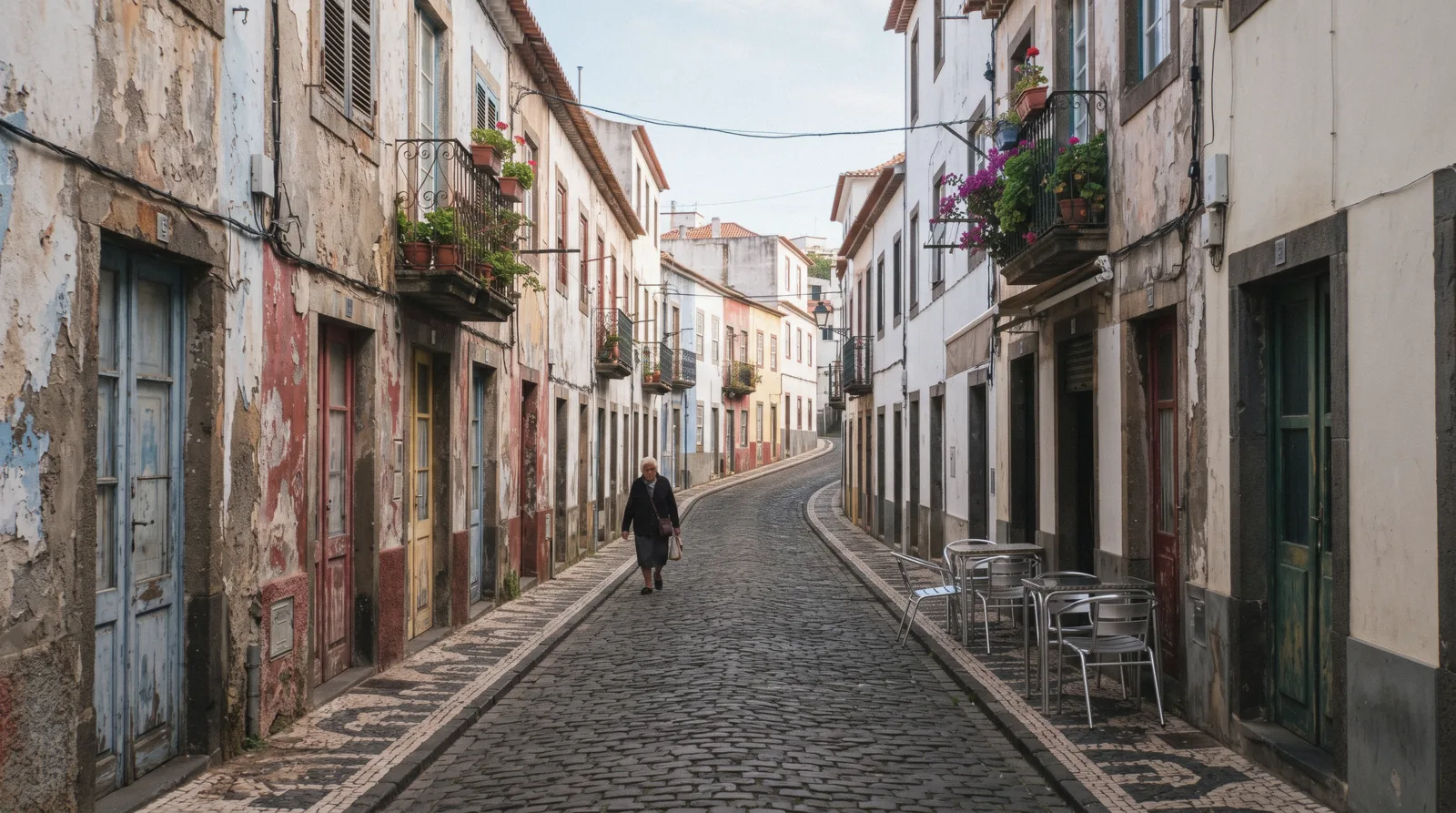
Funchal Old Town
Funchal old town is the district known locally as Zona Velha, the quarter where the first settlement stood after the city won its charter on 21 August 1508. It is flat, it is free to walk, and it holds the cable car's lower station, the farmers' market, a 17th century fort and a street of painted doors that has turned the quarter into an open-air gallery. This page covers what stands here, what each place charges, and how to walk it in an afternoon or an evening. The market and the fort each have their own page with full hours, and the cable car page covers the ride up to Monte that starts at the edge of this quarter. The full Funchal city guide has the rest of the city.
Quick answer What it costs, what's here, how it connects to Monte
Funchal old town, Zona Velha, costs nothing to walk. The quarter holds Rua de Santa Maria and its painted doors, the Corpo Santo chapel, the Mercado dos Lavradores, and the São Tiago fort at the sea end. The cable car's lower station sits inside the Jardim Almirante Reis garden on the quarter's edge, which makes this the natural start of a Monte morning.
Key takeaways
- The Funchal to Monte cable car boards inside the quarter at $18.34 (€16) one way, so a walk here pairs directly with the ride up the slope
- The Mercado dos Lavradores sits right beside the old streets and opens from 07:00 on weekdays, closed Sunday
- The Old Town walking tour covers the quarter in two hours with a guide, at $18.84, and two of the tuk-tuk rides that start here also solve the ride up to Monte: the toboggan and old town tuk-tuk and the cable car finale tuk-tuk
- The São Tiago fort closes the quarter at the sea end. Its exterior and grounds are free, and this site prints no interior hours or fee because two official sources disagree
What's In the Old Town: Hours and Price
Five stops make up a walk through Zona Velha, priced and timed from the operators' and the municipality's own pages. Two of the five carry no settled figure, and the table says so rather than guessing.
| Stop | Hours | Price |
|---|---|---|
| Rua de Santa Maria and the painted doors | Open at any hour, a street not a monument | Free |
| Corpo Santo Chapel | Not stated by an official source | Free to view from outside |
| Mercado dos Lavradores | Weekdays from 07:00, Saturday 07:00-14:00, closed Sunday | Free to enter |
| São Tiago fort | Exterior always open; interior hours unsettled | Exterior free; interior fee unsettled |
| Madeira Story Centre | Daily 09:00-19:00 | $5.73 (€5.00), children $3.44 (€3.00) |
The market and the fort each carry more detail on their own pages. Figures current for Q3 2026.
Old Town Tours and the Rides That Start Here
The cable car's lower station sits inside this quarter, so three of the bookings that start in Funchal begin on these streets. Prices are the platform's own listed US dollar figures.
 from $18.84
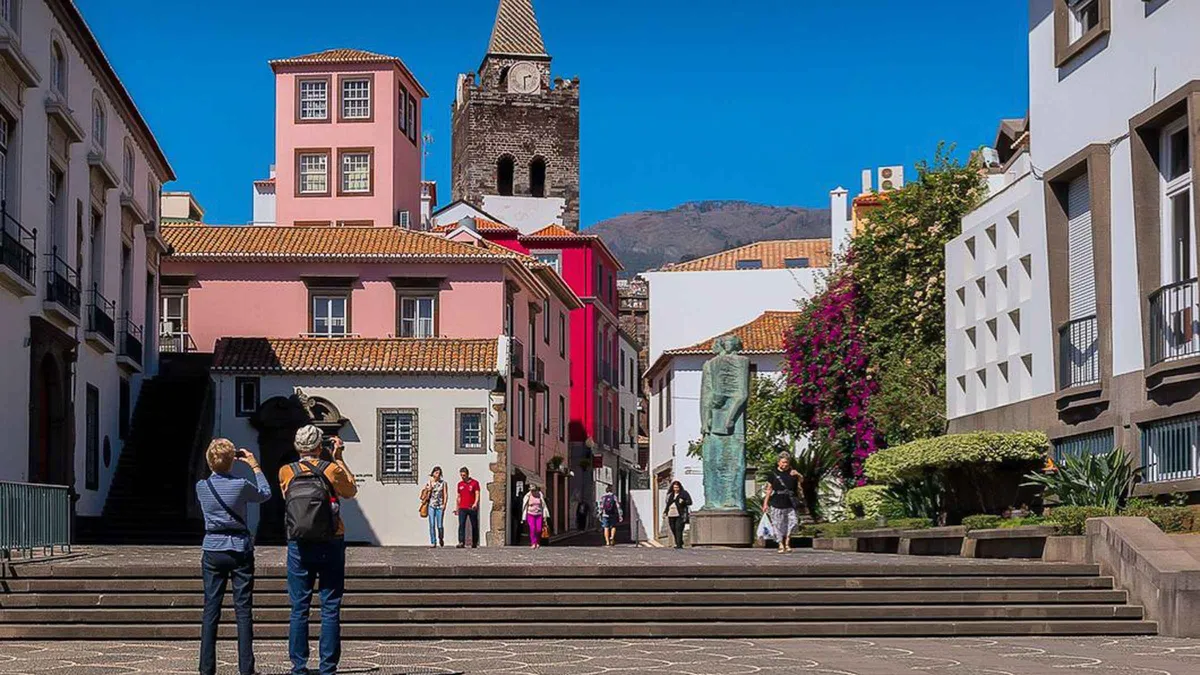
Funchal Old Town Walking Tour
A 2 hour small-group walk through Funchal's Old Town, the Jesuits' College, the Farmers' Market, a wine lodge and a historic sweet factory.
Check Availability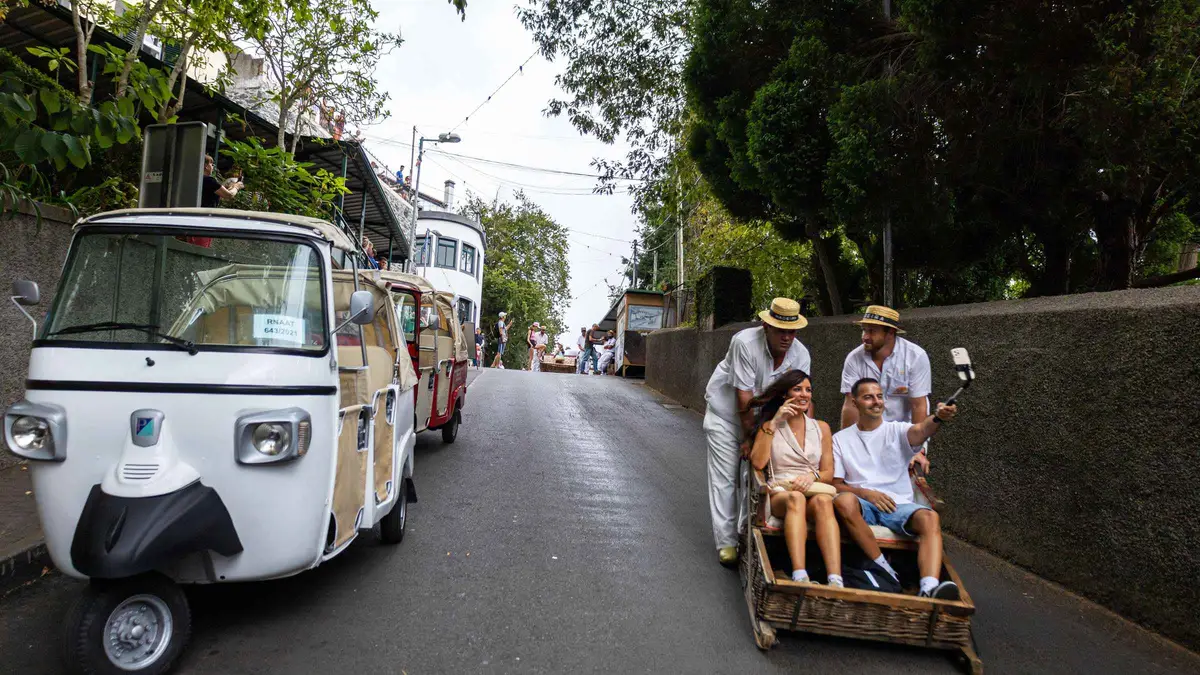 from $37.90
Guided Tuk Tuk Tour to Toboggan Rides & Old Town
A 90 minute tuk-tuk ride to Miradouro dos Marmeleiros and Monte with a driver-guide, the toboggan ride down paid separately on the day.
Check Availability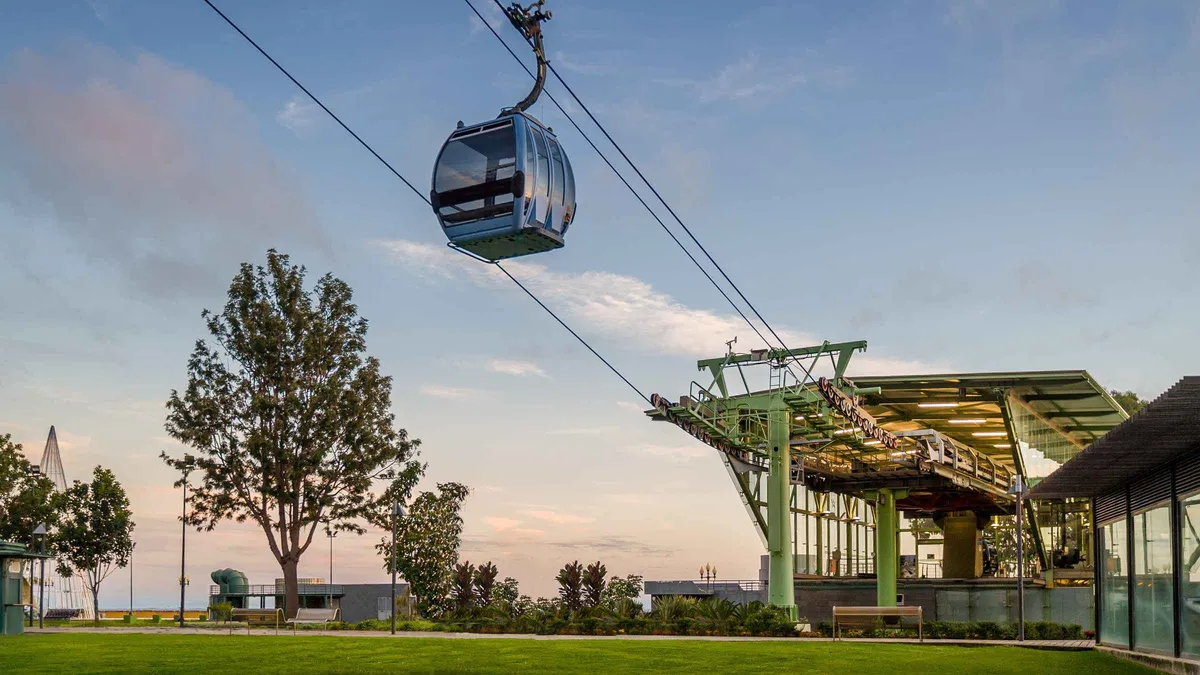 from $91.89
Funchal 2-Hour Tuk-Tuk Tour with Cable Car Finale
A 2 hour small-group Funchal tuk-tuk tour ending with a ride on the Monte cable car, with a local driver-guide and fuel included.
Check AvailabilityPrices, ratings and details are the platform's own. dollar figures are the listed prices — the platform bills in your account's currency.
The First Funchal: How Zona Velha Began
Everything in this quarter traces back to one date and one small chapel, both confirmed on Visit Madeira's own pages.
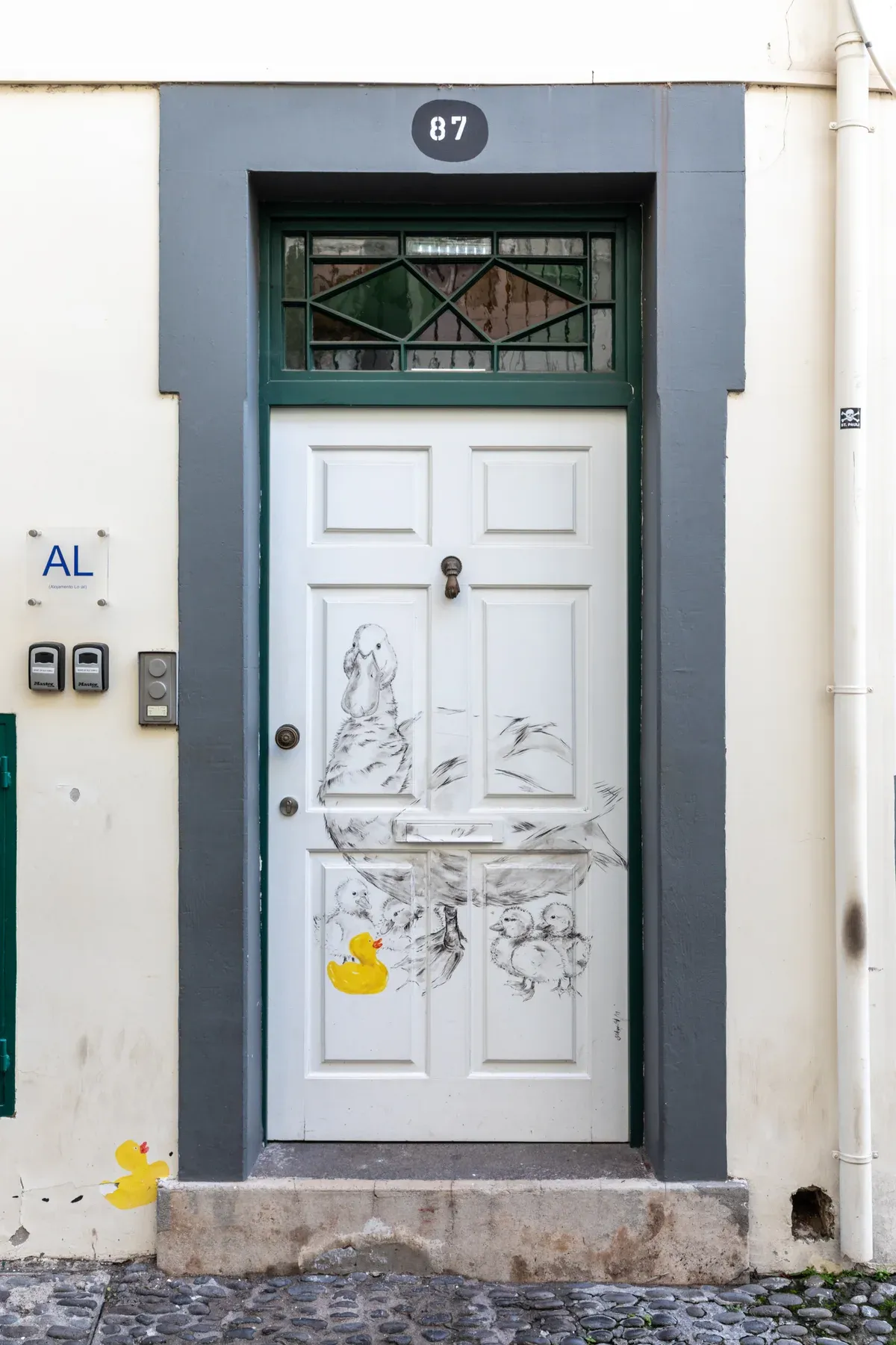
Door 87 on a side street off Rua de Santa Maria, part of the Portas Pintadas project. Photo: Dietmar Rabich, CC BY-SA 4.0, via Wikimedia Commons
1508: The Charter, and the Settlement That Came Before It
Funchal became a city on 21 August 1508, by royal charter of King Manuel I, and the name comes from funcho, the wild fennel the first settlers found growing on the site. The first settlement of Funchal stood in the area now called Zona Velha, on the flat ground between the sea and the ravine that today carries Rua de Santa Maria and its side streets. Before the charter this was already a fishing quarter, and the fishing character never fully left it: the Mercado dos Lavradores stands here for exactly that reason, and the São Tiago fort was raised a century later to protect the same stretch of coast from corsairs.
Walking the quarter today means walking the oldest working ground in the city, not a recreation of it.
Corpo Santo Chapel: One of the Few 15th Century Buildings Left
The Corpo Santo Chapel is named by Visit Madeira as one of the few surviving 15th century buildings in the whole city, which is a short sentence carrying a lot of weight given how much of central Funchal was rebuilt after it. No official source publishes visiting hours or an entry fee for the chapel, so this page prints neither. What is confirmed is its place in the quarter: it sits among the oldest streets, near Rua de Santa Maria, in the part of Zona Velha that predates the fort by more than a century.
Treat it as a stop to see from outside on the walk rather than a timed visit to plan around.
Rua de Santa Maria and the Painted Doors
One street carries most of the reason people come to this quarter by day.
The Portas Pintadas Project
Rua de Santa Maria is named by Visit Madeira as one of the oldest streets in Funchal, running through the historic heart of Zona Velha past sites the city itself names, including the old Fábrica de Chapéus hat factory and the Fábrica de Botas de Vilão boot works, the Baroque Socorro Church, and a small viewpoint along the way. What changed the street from a row of shuttered doors to a walking destination was the Portas Pintadas, painted doors, project, which invited artists to paint the doors and façades of the quarter. The result reads as an open-air gallery: some panels are portraits, some are landscapes, some, like the goose and goslings on door number 87 pictured above, are just playful.
None of it is signed or dated on a plaque, so the street rewards slow walking rather than a checklist.
- The street is flat and pedestrian-friendly for its full length
- Doors change over time as the paint weathers and buildings turn over, so no fixed list of which door carries which image exists
- The Baroque Socorro Church and a small viewpoint sit along the same street, both free to see from outside
Why This Street Is the Practical Start of a Monte Morning
The Funchal-Monte cable car's lower station sits inside the Jardim Almirante Reis garden, at the edge of this same quarter, address Rua Dom Carlos I, 9060-190 Funchal. That is not a coincidence a visitor needs to plan around, it is a reason to start the day here: walk the painted doors while the street is quiet in the morning, then step straight into the cable car queue without a second journey across the city. The cable car page has the full timetable, and it runs daily 08:45-17:45 with last boarding at 17:45, closed only on Christmas Day.
The Market and the Fort at the Sea End
Walk toward the water and the quarter's other two landmarks appear within a few minutes of each other.
Mercado dos Lavradores
The farmers' market opened on 24 November 1940 to a design by architect Edmundo Tavares, in Rationalist Modernism with Art Deco tile panels by João Rodrigues, and it sits directly beside the old streets. Fruit, flowers and fish fill the halls and entry is free. The trap is the hours: the municipal markets site and Visit Madeira disagree on the Friday closing time, one saying 19:00 and the other 20:00, and both agree it runs Saturday 07:00-14:00 and closes Sunday and public holidays.
The full hours, the tile panels and the Friday discrepancy are on the market's own page.
The São Tiago Fort: What We Could Not Settle
Construction on the São Tiago fort began in mid-1614 under royal master builder Jerónimo Jorge, to defend Funchal against corsair attacks, and was finished by his son Bartolomeu João. The fort later served as British troop headquarters, as Army Police quarters, as a flood shelter after the 1803 flood, and as the home of the Contemporary Art Museum from 1992 until that collection moved to Calheta in 2015. The exterior and the grounds are free to visit.
Here is the honest part: two official-adjacent sources give contradictory interior hours and a contradictory fee, one saying free and another saying €3, and one giving Monday-Saturday hours and another Tuesday-Friday hours. Rather than pick one, the fort's own page prints the conflict and tells you to check at the door. The pebble beach of Praia de São Tiago sits directly under the fort's walls, free to enter.
Madeira Story Centre
One more stop sits on the edge of the quarter, at Rua D. Carlos I 27, close to the fort. The Madeira Story Centre is open daily 09:00-19:00, which corrects an outdated claim on some travel sites that it has closed. It charges a paid admission, but neither the municipal listing nor the venue's own page publishes an exact adult or child price, so this page states none rather than guess.
Walking It, Eating In It, and the Evenings
The quarter works differently by morning and by night, and two licensed operators run walks through it if you would rather not navigate alone.
Two Licensed Walking Tours Start Here
Madeiran Heritage, a non-profit university students' programme registered as RNAAT 768/2016, runs an Old Town Walking Tour from $17.08 (€14.90) per person, two hours, Monday to Friday, meeting at the Jesuits' College store on Rua dos Ferreiros. Free Walking Tours Funchal, RNAAT 1352/2018, runs a pay-what-you-choose Old Town Free Tour on Monday, Wednesday and Saturday at 09:30, about two hours, with a prepaid rate of €7.50 per person for groups of seven to twelve. Either is a cheaper way into the quarter's history than a guess from a blog, since both operators hold the regional tourism registration number that lets them lead paid groups.
| Operator | Price | When |
|---|---|---|
| Madeiran Heritage Old Town Tour | $17.08 (€14.90) | 2 hours, Mon-Fri, from the Jesuits' College store |
| Free Walking Tours Funchal, Old Town route | Pay what you choose | About 2 hours, Mon, Wed, Sat 09:30 |
| The Old Town walking tour | $18.84 | 2 hours, platform booking |
By Night: One of the Island's Own Named Attractions
Visit Madeira's own description of this quarter calls its nightlife one of the island's major attractions, worth seeing by day and by night, and the bars and restaurant tables along the old streets back that up after dark. The fort's floodlit yellow walls and the narrow lanes read differently once the shops close, which is the reason locals treat an evening here as a separate outing from the daytime walk rather than an extension of it. No official source publishes a crowd count or a safety rating for the quarter at night, so this page states none, only that the area stays populated and lit through the evening.
A Small Viewpoint on the Way
Visit Madeira names a viewpoint called Socorro inside the historic Santa Maria quarter, at about 20 m above the water, looking over the port and the Barreirinha bathing complex. The name comes from the same Santa Maria parish that gives Rua de Santa Maria its own name, and the low height means the view is more about the working port below than a wide sweep of the coast. It costs nothing and needs no timing, unlike the market or the fort's interior, so it is a natural pause between the painted doors and the fort at the end of the walk, a place to stand for a minute rather than a stop to plan the day around.
Funchal Old Town Map: The Doors, the Market and the Fort
Zona Velha runs flat between the cable car garden and the São Tiago fort, with the market and the painted-door streets in between.
Coordinates from OSM Nominatim for each address.
Next Stop From the Old Town
Three places that continue naturally from a walk through Zona Velha.
Mercado dos Lavradores
The farmers' market stands right beside the old streets, free to enter, open from 07:00 on weekdays and closed Sunday. The market guide has the full hours and the Friday discrepancy between the two official sources.
São Tiago fort
The fort closes the quarter at the sea end, its yellow walls visible from most of the old streets. The exterior is free. The fort's own page explains why this site prints no interior hours or fee.
Funchal cable car
The lower station sits inside this quarter, at $18.34 (€16) one way to Monte. The cable car page has the full timetable and fares.
Funchal Old Town Questions
What is Funchal's old town called?
Zona Velha, meaning old zone. It is the quarter where the first settlement of Funchal stood after the city's charter of 21 August 1508, and it holds Rua de Santa Maria's painted doors, the Mercado dos Lavradores and the São Tiago fort.
Is Funchal old town worth visiting?
Yes, and it costs nothing to walk. The painted doors of Rua de Santa Maria, the free-to-view Corpo Santo Chapel, the market next door and the fort at the sea end fill a morning or an evening, and the cable car to Monte starts inside the same quarter.
What are the painted doors in Funchal old town?
The Portas Pintadas project, which invited artists to paint the doors and façades of Rua de Santa Maria and its side streets, turning them into an open-air gallery. There is no official signed list of which door carries which image, so the street rewards a slow walk rather than a checklist.
Is Funchal old town safe at night?
No official crime figure for the quarter is published, so this page states none. Visit Madeira's own description calls the area's nightlife one of the island's major attractions, worth seeing after dark, and the bars and restaurant tables keep the streets lit and populated through the evening.
How do I get from the old town to the Monte cable car?
You are already there. The cable car's lower station sits inside the Jardim Almirante Reis garden at the edge of Zona Velha, and it boards daily 08:45-17:45 for the 18 minute ride to Monte at $18.34 (€16) one way. See the cable car page for the full fare table.
How much time does Funchal old town take to see?
The streets themselves are a short, flat walk, but the painted doors reward slowing down, and the market and the fort each add time if you go inside. Two to three hours covers the quarter at an easy pace, longer if you add the Old Town walking tour or a meal in the evening.
Funchal Old Town on Film: Zona Velha and the Painted Doors
Three walks through the old streets that show the doors, the fort and the market at ground level.
Madeira: Funchal, Old Town (Zona Velha) Fortaleza de Santiago, walking tour, aerial views
A ground-level and aerial walk that pairs the old streets with the fort at the sea end.
Video: The Azevedo FamilyOld Town - Zona Velha - Funchal - Madeira
A street-level pass through Zona Velha showing the painted doors and the quarter's layout.
Video: TIP MADEIRA - CITADELS ParadiseWalk through Funchal City Center, Old Town (Zona Velha), Harbour & City Park on Madeira in Portugal
A longer walk connecting the old town to the centre and the harbour on foot.
Video: SplashpackerVideos load from YouTube only when you press play. Prices and opening hours shown in older films may be out of date.
Prices, hours and terms are set by the venue or operator and confirmed at checkout.
We may earn a commission if you book through one of our links, at no extra cost to you. Full affiliate disclosure