 Funchal City Guide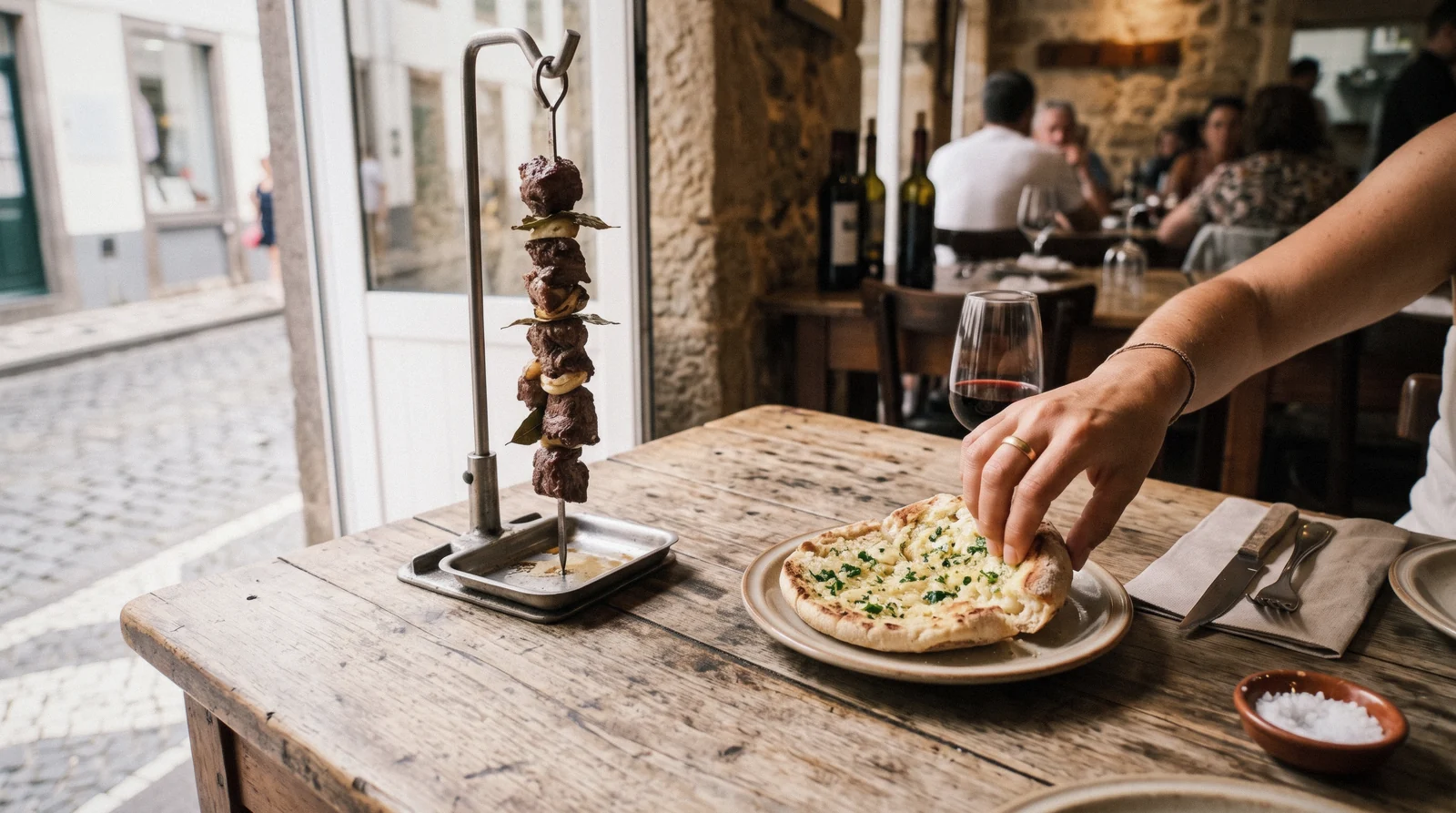
What to Eat in Funchal: Madeiran Dishes and Drinks Explained
Funchal is the easiest place on the island to work through the Madeiran kitchen, dish by dish. This page is the reference: what espetada, bolo do caco, filete de espada and carne de vinha d'alhos actually are, where each tradition comes from, and which drinks and sweets belong on the same list. It goes deeper than the short five-classics roundup on where to eat and it stays factual. Everything here comes from Visit Madeira, the regional tourism body, unless noted. One honest caveat up front. No official, citable source publishes current prices for a bica, a poncha, an espetada plate, a prato do dia or a bolo do caco anywhere in Funchal, so you will find no dish prices on this page. What you will find is the dish-by-dish answer to the question of what to eat in Funchal, plus the festivals, the market and the wine basics that tie it all together. The city that cooks it is our subject on the Funchal guide.
Quick answer The four dishes and one drink that answer this question
Four dishes answer most of what to eat in Funchal: espetada, beef on a bay-laurel skewer, bolo do caco, a sweet-potato flatbread, filete de espada, black scabbardfish with banana, and carne de vinha d'alhos, wine-marinated pork. Wash them down with poncha, sugarcane spirit stirred with a wooden mexelhote since the 18th century.
Key takeaways
- Start with the Funchal city guide for the wider trip, then where to eat for venues.
- Order poncha properly with the full guide on poncha and cafes.
- Taste the whole list in one sitting on the food and wine walking tour.
The Savoury Classics
These four plates form the backbone of any Madeiran food list. Each has a clear origin story and a traditional pairing, and all four turn up across Funchal, from market-adjacent taverns to parish festivals.
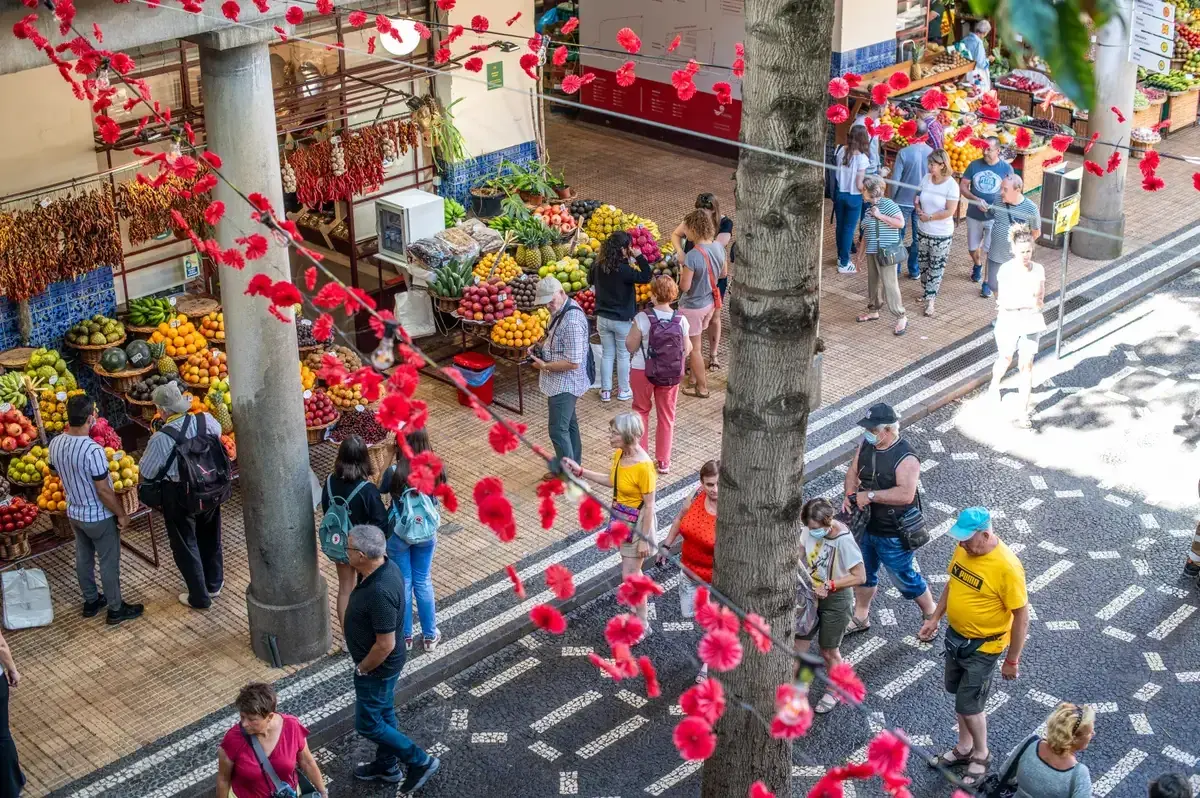
Mercado dos Lavradores ground-floor fruit stalls, the produce end of the same food culture that puts espetada and bolo do caco on Funchal's tables. Photo: Michael Gaylard from Horsham, UK, CC BY 2.0
Espetada
Espetada is beef threaded onto a skewer made of bay laurel wood and grilled over charcoal. The bay laurel is the point as much as the beef. As the skewer heats, the wood releases its aroma into the meat, which is why Madeirans refuse to substitute a metal skewer.
It is served with milho frito, fried cornmeal cut into cubes, which soaks up the juices. You will see espetada at summer arraiais and in taverns across Funchal. Look for it listed simply as espetada madeirense.
It is the dish most visitors come home talking about, and the one the food tours in Funchal build their tastings around.
Bolo do Caco
Bolo do caco is a flat, round sweet-potato bread cooked on a hot basalt stone, which gives it its name, caco meaning shard or stone fragment. It was born in Porto Santo as a way to use leftover bread dough. In Funchal it appears at every meal and in between.
The classic version comes split and slathered with garlic-parsley butter, still warm. Fillings like chorizo or cheese are also common, turning it into a standing lunch or a festival snack. It is the bread that arrives at the table before most meals, so you will taste it whether you order it or not.
If you only learn one Madeiran food word, make it this one.
Filete de Espada
Filete de espada is black scabbardfish, a long, dark, almost alarming-looking deep-water fish landed at Camara de Lobos, the fishing town just west of Funchal. The fillet is breaded and fried, and the island's signature pairing is with banana, usually fried plantain-style, sometimes with a passion-fruit sauce in modern kitchens. The contrast of savoury fried fish and sweet banana sounds odd until you try it, then it makes sense.
Camara de Lobos is a short trip away if you want to eat it where the boats land, but most Funchal restaurants serve their own version.
Carne de Vinha d'Alhos
Carne de vinha d'alhos is pork marinated in garlic, white wine and spices, then cooked until tender. Its traditional slot is Christmas Eve, when Madeiran families eat it in the days around the holiday. You do not need to wait for December though.
It is the standard filling for the sandwiches sold at the Noite do Mercado in Funchal every 23 December, and many taverns serve it year round as a main with fried cornmeal or rice. Think of it as the island's answer to a stew, with a sharp, garlicky edge from the marinade.
Descriptions from Visit Madeira, Traditional Madeira Food: https://visitmadeira.com/en/what-to-do/food-and-wine-enthusiasts/traditional-madeira-food/
Poncha and the Traditional Drinks
Madeira drinks its own drinks, not just Portuguese ones. Poncha leads the list, but the island's soft drinks, beers and liqueurs have their own histories.
Poncha
Poncha is the island's drink. It traces to the 18th century, adapted from a drink called panche brought from India by the English. The original version, Poncha a Pescador, was first made in Camara de Lobos to warm fishermen on cold nights at sea.
Two things are essential: aguardente de cana, the sugarcane spirit, and the wooden mexelhote used to stir it vigorously. The spirit itself has a certified minimum of 37.5% alcohol by volume under IVBAM rules. No official figure is published for the mixed drink itself, which is weaker but still potent.
Flavours include passion fruit, tangerine, English tomato and mint, and bars often serve it with a dentinho, a free snack such as peanuts or lupin beans. For the full guide to ordering one, see poncha and cafes.
Nikita and Licor de Ginja: Two More Village Traditions
Two drinks on this list trace to specific villages rather than to Funchal itself, and knowing where they come from explains why they taste the way they do. The Nikita comes from Camara de Lobos, the fishing town that also gave the island poncha. It blends ice cream, pineapple, pineapple juice and pale beer into a creamy, cold drink that reads like a dessert but carries alcohol, and non-alcoholic versions swap the beer for a soft drink so families order it too.
It is the drink of choice at Camara de Lobos festivities, and Funchal's old-town bars serve it as well. Licor de ginja comes from Curral das Freiras, the chestnut village in the mountains above Funchal. Ginjas, sour cherries, are infused in brandy and sugar for three months before bottling, producing a deep red liqueur served in small glasses, often with the fruit left at the bottom.
It appears after dinner and at festival stalls, including the Chestnut Festival in Curral das Freiras, so a stop there for the nuns valley trip is the one place you are likely to find it poured at the source rather than bottled.
Laranjada, Brisa Maracuja and Coral
Laranjada, created in 1872, is one of the oldest soft drinks in the world, flavoured with orange peel. At festivities it is mixed with wine or with Coral beer. Brisa Maracuja, created in 1970, was the world's first soft drink made with pure passion-fruit juice, and it remains the island's everyday fizzy drink.
Coral is the local lager, brewed with Czech malts and hops. Order all three in almost any Funchal cafe or supermarket.
Drink descriptions from Visit Madeira. ABV figure certified by IVBAM.
Sweets and Regional Products
Madeiran sweets lean on three island crops: passion fruit, sugarcane honey and local fruit. The shorter entries are listed together, followed by the products that shape the whole food calendar.
The Short List of Sweets
Seven sweets cover the classic list. They are worth knowing by name because they appear on dessert menus and at festival stalls across Funchal.
- Pudim de Maracuja: passion-fruit pudding, the most common dessert on local menus.
- Palitos de Cerveja: Christmas broa made with beer.
- Bolo Preto da Madeira: dark cake made with sugarcane honey, Madeira wine, beer, cinnamon and candied fruit.
- Malassadas: fried Carnival sweets finished with sugarcane honey.
- Rebucados de Funcho: handmade fennel sweets, traditionally a throat soother.
- Queijada da Madeira: small tarts of curd cheese, eggs and sugar.
- Mousse de Anona: mousse made from cherimoya.
Passion Fruit and the Banana
Passion fruit runs through the island's food. It flavours poncha and Brisa Maracuja, thickens desserts such as pudim de maracuja, and appears in sauces served with espada. The Madeira banana was introduced by Portuguese navigators in the 16th century and is grown mainly on the south coast's fertile volcanic slopes, where Visit Madeira says the subtropical climate gives it a sweet, intense flavour, a creamy texture and a compact size next to a supermarket banana.
It holds PGI status, meaning protected geographical indication, and it is the fruit paired with swordfish in the classic espada com banana dish and worked into desserts elsewhere on this list. Look for it at Mercado dos Lavradores stalls, where it is sold alongside the passion fruit rather than only as a plate garnish.
Sugarcane, Chestnut and Anona
Sugarcane was the island's 15th and 16th century white gold. It is still grown for sugarcane honey and rum, the base of poncha and the sweetener in bolo preto. The anona, or cherimoya, was introduced in the 17th century and carries PDO status, and it stars in mousse de anona.
The chestnut belongs to Curral das Freiras, where roasted chestnuts are sold in the streets and the Chestnut Festival has run for over three decades, usually in October and November.
Sweets and product descriptions from Visit Madeira.
When and Where to Eat It All
Madeira's food calendar is crowded. Time your visit against these events and the dishes walk toward you.
Noite do Mercado
Every 23 December, Funchal's Mercado dos Lavradores and the surrounding streets fill for the Noite do Mercado. Locals come to eat carne de vinha d'alhos sandwiches and drink homemade liqueurs through the night. It is the single busiest food night of the Funchal year, and the market is its stage.
The market itself opened in 1940 and is liveliest early morning. It is closed on Sundays. For exact opening hours and how to visit, see Mercado dos Lavradores and Sunday openings in Funchal.
Arraiais and Magusto
Arraiais are the parish festivals that fill Madeiran summers, roughly June to August. The food formula is fixed and reliable: espetada off the charcoal, bolo do caco with garlic butter, poncha by the jug. If you visit in summer, ask at your accommodation which parish has an arraial that week.
Magusto falls on 1 November, when roasted chestnuts are shared in the streets. Together with the Curral das Freiras Chestnut Festival, usually in October and November, autumn is chestnut season across the island.
Eating Without a Festival
Outside the calendar, taverns across the city serve the same dishes daily, so missing the Noite do Mercado or an arraial by a week costs you nothing. The Zona Velha old town is the densest cluster of bars and small kitchens, the same streets described as the epicentre of nightlife in our poncha and cafes guide. One planning trap to know before you go: Mercado dos Lavradores itself is closed on Sundays, so a Sunday food walk has to skip the market stage and focus on the taverns instead.
See Sunday openings in Funchal for what else that affects. If you would rather let a guide sequence the dishes for you, the walking tours listed below cover the market and several taverns in one route.
Festival dates and market details from Visit Madeira and Visit Funchal.
Madeira Wine in Brief
No Madeiran meal closes without at least a glass of Madeira wine.
Grapes and Sweetness
Madeira wine is built on six noble grapes: Sercial, Verdelho, Boal, Malvasia and Terrantez, plus Tinta Negra, which accounts for 80 to 85% of production. Wines are sorted into sweetness bands by Baume degree: Extra Seco, Seco, Meio Seco, Meio Doce and Doce. Under IVBAM pairing guidance, the drier Seco styles work as aperitifs and Meio Doce goes with dessert.
If a bottle carries no age statement, it has spent a minimum of three years ageing. For the full sweetness table and a visit to one of the island's historic lodges, see Blandy's Wine Lodge.
Grape and classification facts from IVBAM.
Taste the Whole List in One Sitting
You can work through the dishes above on your own, or you can let a guide sequence them. The tours compared here cover the food, the poncha and the wine side by side.
 from $109.11
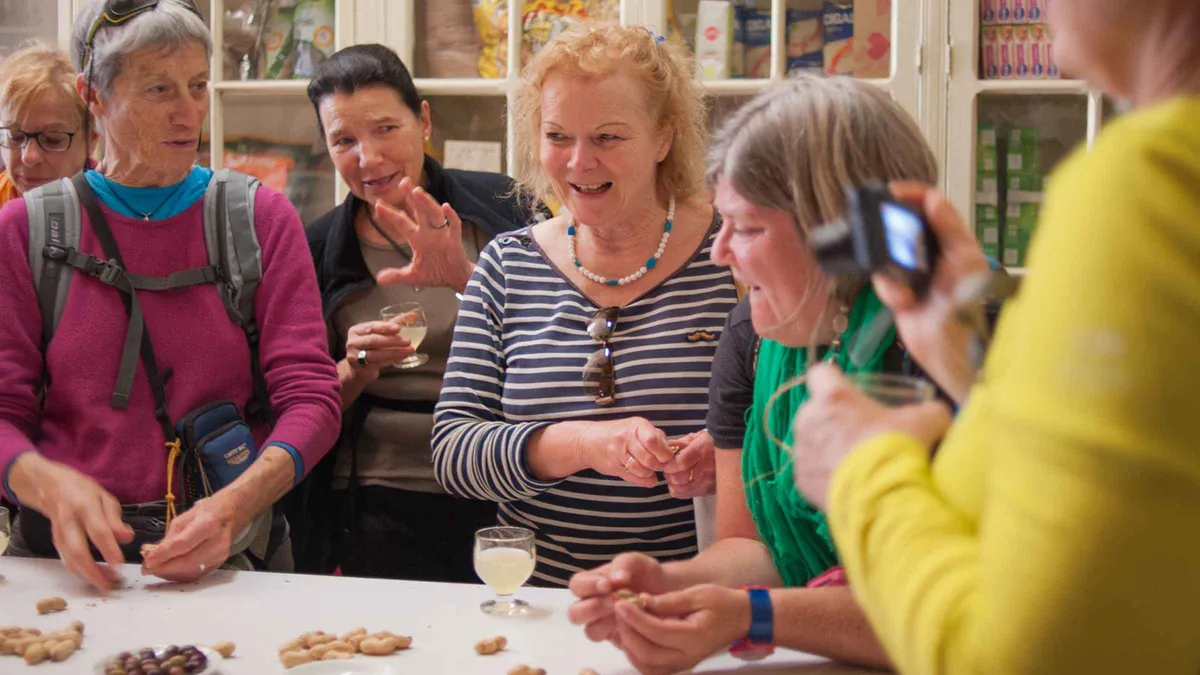
Madeira Food and Wine Walking Tour in Funchal
A small-group Funchal food and wine walk with 11 food tastings and 6 drinks across local taverns and the market, limited to 10 guests.
Check Availability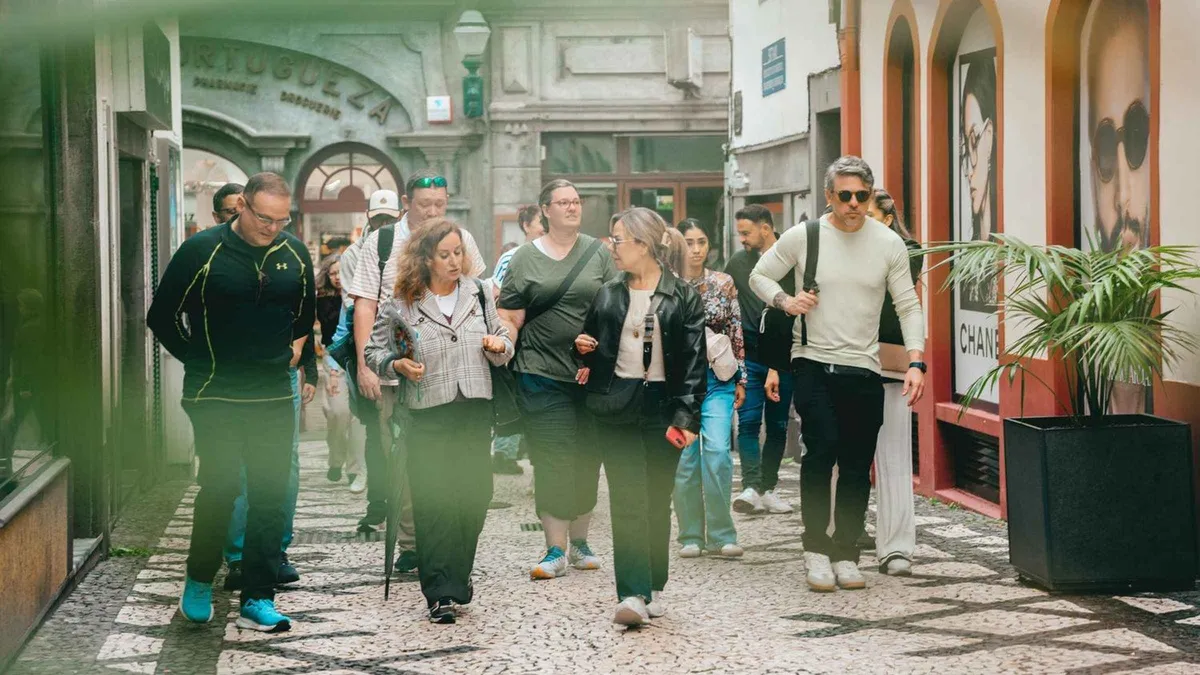 from $106.82
Taste Funchal: Food, Wine and Cultural Tour
A 4 hour Funchal food, wine and culture walk from Rua do Sabão, with vegetarian and gluten-free tasting options.
Check Availability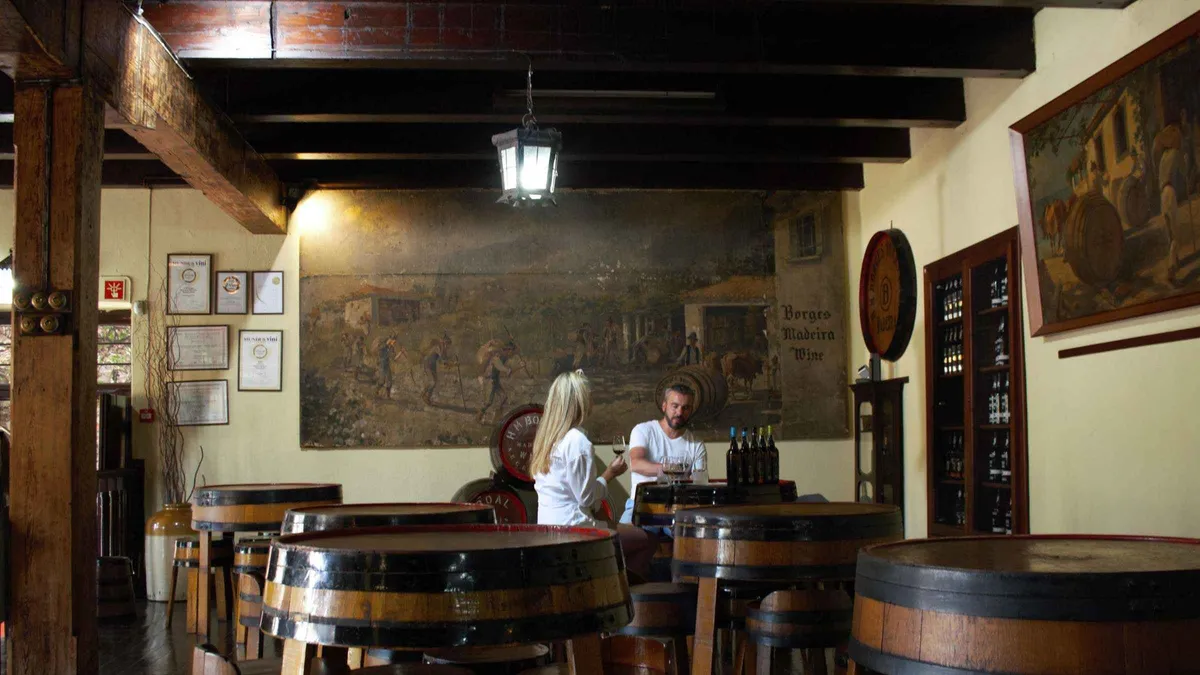 from $22.97
H.M. Borges Winery Guided Tour with Wine Tasting
A short guided tour of the H.M. Borges winery in central Funchal with a wine tasting of 2 to 6 pours, paired with local sweets.
Check Availability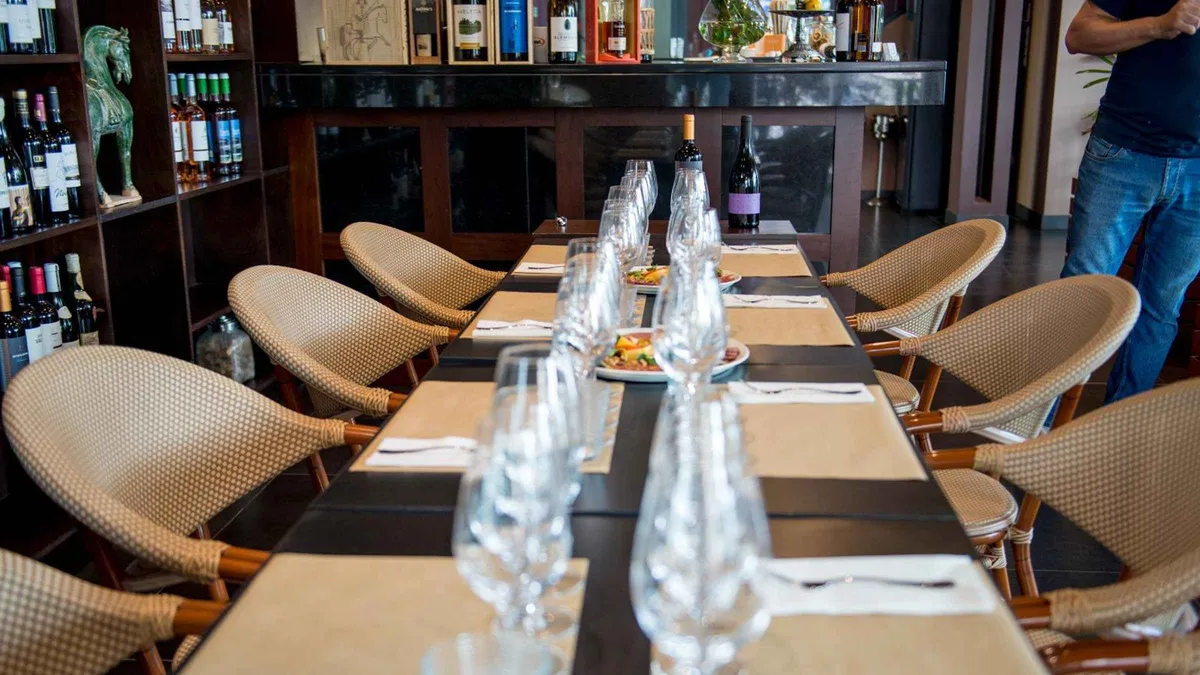 from $44.22
Madeira Wine Tasting with Sommelier
A 90 minute sommelier-guided tasting of 5 aged Madeira wines paired with cheese, dried fruit and chocolate at a Funchal venue, transport not included.
Check AvailabilityPrices, ratings and details are the platform's own. dollar figures are the listed prices — the platform bills in your account's currency.
Keep Planning Your Funchal Food Trip
Three pages take you from this dish list to an actual eating plan.
Where to Eat in Funchal
The shortlist of five classics plus practical venue guidance for each.
Poncha and Cafes
How poncha is made, the flavours to order and where the locals drink it.
Best Restaurants in Funchal
The Michelin Guide 2026 entries from two stars to Bib Gourmand, ranked and explained.
What to Eat in Funchal: Questions
What food is Madeira famous for?
According to Visit Madeira, the signature dishes are espetada, beef grilled on a bay-laurel skewer, bolo do caco, the sweet-potato flatbread, and filete de espada, black scabbardfish served with banana. The signature drink is poncha, sugarcane aguardente stirred with a wooden mexelhote. All four are easy to find in Funchal.
Where do locals eat in Funchal?
No official source publishes a ranking of where locals eat, so any such claim is guesswork. For a practical route, start with the venues on the where-to-eat page and, for a special occasion, the ten Funchal entries in the MICHELIN Guide 2026, which range from the Bib Gourmand family-run Casal da Penha to the two-star Il Gallo d'Oro.
What should I be careful of with food in Madeira?
This page has no sourced food-safety warning to report, so none is offered. The only practical caution is strength: poncha is made from a spirit with a certified minimum of 37.5% alcohol by volume, and the mixed drink goes down easily.
What time do locals eat in Madeira?
No source in this guide's research pack states local meal times, so the honest answer is that it is not stated. Book around your own schedule and note that the Mercado dos Lavradores is liveliest early morning.
What is in a Nikita?
A Nikita blends ice cream, pineapple, pineapple juice and pale beer. It comes from Camara de Lobos, and non-alcoholic versions replace the beer with a soft drink.
Does any Madeiran dish have a protected status?
Yes. The Madeira banana holds PGI, protected geographical indication, status, and the anona, or cherimoya, carries PDO status. Both appear in the classic dishes and desserts listed on this page.
See the Dishes Before You Order Them
Madeira's most Traditional Steak on a BAY SKEWER - Espetada!
A close look at how espetada is built on its bay-laurel skewer and cooked over charcoal, the classic first Madeiran dish to try.
Video: Cooking like Ramos24 Hours of Portuguese Food in Madeira: ESPETADA + Bolo Do Caco & More!
A day of eating across Madeira covering espetada, bolo do caco and the other plates listed on this page.
Video: Luke MartinEspetada | Beef Skewers from Madeira Island, Portugal
A straightforward demonstration of the beef skewer tradition behind the island's most famous savoury dish.
Video: Just Cook With Michael SantosPrices, hours and terms are set by the venue or operator and confirmed at checkout.
We may earn a commission if you book through one of our links, at no extra cost to you. Full affiliate disclosure